 11
Crude oil price impact on India: A sharp fall in crude oil prices can change the mood of global financial markets in just a few hours.
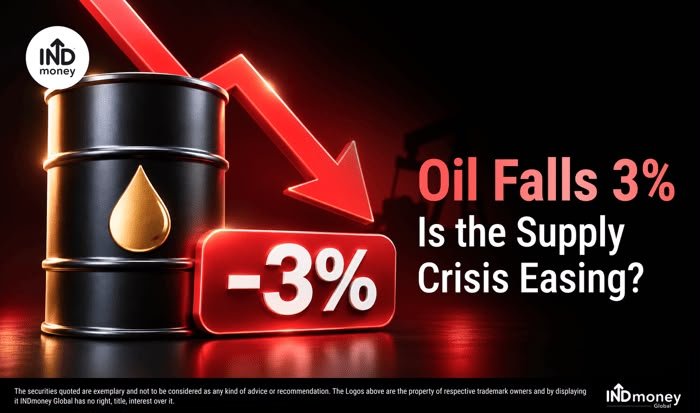
That is exactly what happened on November 2, 2026. Brent crude, which had been trading around $113 per barrel, dropped towards $104. US West Texas Intermediate (WTI) crude also moved below the $100 mark.
The immediate reason was renewed hope that diplomatic discussions between Iran and the United States could reduce tensions in the Middle East and ease disruption around the Strait of Hormuz.
For India, this development matters much more than a simple fall in the price of oil.
India imports most of the crude oil it consumes. Therefore, a sustained decline in international crude prices could reduce the country’s import bill, ease pressure on the rupee, support inflation management and improve the outlook for some oil-related companies.
But there is one important point: the diplomatic proposal is not a final peace agreement.
On November 3, crude prices moved higher again after reports of a US strike on Iran’s Qeshm Island and fresh comments indicating that an agreement remained uncertain. This shows how quickly geopolitical developments can reverse market sentiment.
The major trigger was renewed diplomatic activity involving Iran, the United States and Qatar.
Qatar has been acting as a mediator, helping both sides exchange proposals and messages. Reports on November 2 indicated that Iranian negotiators had left Doha after discussions, while a draft proposal was being circulated.
The proposal was linked to Iran’s existing conditions for ending the conflict and reopening the Strait of Hormuz.
Iran has indicated that it could reopen the Strait of Hormuz within approximately two days under certain conditions.
These conditions include:
These are negotiating conditions, not terms of a completed agreement.
Reuters reported that the discussions had not produced a breakthrough, and the United States and Iran still had significant differences to resolve.
Also Read – October Auto Sales: Festive Demand Returns, but Are Automobile Stocks Ready for Their Next Rally?
Financial markets do not always wait for an agreement to be signed.
They react to the possibility of future events.
If traders believe that the conflict could ease, they may start pricing in lower risks to oil production, shipping and global energy supplies.
That expectation can push crude oil prices down even before the physical supply situation improves.
This is what happened on November 2, when Brent and WTI both fell sharply on hopes of diplomatic progress.
However, the rebound on November 3 showed that investors were still worried about the possibility of further military escalation.
The Strait of Hormuz is one of the world’s most important energy shipping routes.
It connects the Persian Gulf with the Gulf of Oman and the Arabian Sea. A significant volume of global oil and gas shipments normally passes through this narrow waterway.
For India, the route has strategic importance because several major oil suppliers are located in the Gulf region.
India imports close to 89% of its crude oil requirements, according to recent government data.
This makes international crude prices an important factor for the Indian economy.
A rise in crude prices can increase the cost of importing energy. A fall can reduce that burden, provided the lower prices continue.
The Strait of Hormuz has historically carried a substantial share of India’s crude imports. Recent estimates have placed the share around 40–45%, although the exact proportion changes with suppliers, shipping routes and India’s sourcing strategy.
India has also diversified its crude oil purchases across more countries and routes. Government statements in 2026 have highlighted the increasing availability of non-Hormuz supplies.
This diversification helps, but it does not remove India’s exposure to global oil prices.
A sustained decline in crude oil prices could support India through several economic channels. (Crude oil price impact on India)
India spends a significant amount of foreign currency importing crude oil.
When international oil prices rise, the cost of these imports increases. This can put pressure on the country’s trade balance and current account deficit.
When crude prices fall, the import bill may reduce.
For example, if India imports the same quantity of crude at a lower average price, it needs to spend fewer dollars on those purchases.
That can help reduce external financial pressure.
However, the actual benefit will depend on import volumes, the rupee-dollar exchange rate, freight costs and the prices of other imported commodities.
Crude oil imports create demand for US dollars.
When the oil import bill rises sharply, Indian companies and importers may need more dollars to pay international suppliers.
This can add pressure to the rupee.
Lower crude prices can reduce that dollar requirement and potentially support the Indian currency.
But the rupee does not move only because of crude oil.
Foreign investment flows, US interest rates, global dollar strength and India’s broader trade position also influence its movement.
Crude oil affects much more than petrol and diesel.
It influences transportation, manufacturing, aviation, chemicals, logistics and several other industries.
When fuel and transportation costs rise, businesses may eventually pass some of those expenses to consumers.
Lower crude prices can reduce these cost pressures.
This may give the Reserve Bank of India some additional comfort when assessing inflation risks.
However, cheaper crude does not automatically mean an immediate reduction in retail petrol or diesel prices.
Lower energy import costs can improve the broader economic environment.
It may reduce pressure on inflation, the external balance and government decisions around fuel-related costs.
For the RBI, a more comfortable inflation outlook can create greater flexibility in monetary policy discussions.
But this does not guarantee an interest rate cut. The RBI considers several indicators, including food inflation, core inflation, economic growth and global financial conditions.
Investors may naturally look towards oil marketing companies and businesses that depend heavily on fuel.
However, lower crude prices do not benefit every company in the same way.
HPCL is one of India’s major public-sector oil marketing companies.
It purchases crude oil, processes it through refineries and sells petroleum products.
A decline in crude prices can potentially improve its marketing economics, especially if retail selling prices do not fall as quickly as input costs.
However, refining margins, inventory changes, product prices and government policy can also affect its profitability.
BPCL is another major company that investors may monitor when crude prices decline.
Lower crude costs can help its business under favourable conditions.
But the impact depends on the difference between crude purchase costs and the prices received for petrol, diesel and other petroleum products.
Investors should also monitor refining margins and inventory gains or losses.
Indian Oil Corporation has a large refining, pipeline and fuel marketing network.
A sustained decline in crude prices may improve certain parts of its business.
However, lower crude prices can also create inventory losses if the company is holding crude or petroleum products purchased at higher prices.
Therefore, it is important to understand the full business impact instead of assuming that falling crude automatically means higher profits.
Lower crude prices may also benefit parts of the automobile sector.
The reason is simple: fuel costs influence consumer spending and transportation expenses.
If lower oil prices eventually translate into more affordable fuel, consumers may have more disposable income.
Transport and logistics costs may also become more manageable for businesses.
But automobile stocks depend on many other factors, including vehicle demand, interest rates, raw material costs, competition and sales growth.
A falling crude price can create a positive headline, but investors should not confuse a short-term market reaction with a long-term investment opportunity.
There are three important risks.
The draft proposal is not a signed peace agreement.
Both countries still have differences over the conditions for ending the conflict and reopening the Strait of Hormuz.
Until an agreement is reached and implemented, geopolitical risk remains.
On November 3, reports of a US strike on Iran’s Qeshm Island and comments from Iranian officials pushed crude prices higher again.
Brent and WTI rebounded after Monday’s sharp decline.
This is a reminder that oil markets can react quickly to military developments, shipping disruptions and political statements.
For oil marketing companies, profitability depends on several variables:
A stock may rise on the expectation of better margins, but the actual financial results may be different.
Instead of reacting to every headline, investors should monitor a few important developments.
Watch whether Brent remains lower over several trading sessions.
One sharp fall is not enough to establish a new trend.
The reopening of the route needs to be reflected in actual shipping activity, not just diplomatic statements.
Normal shipping movements would provide stronger evidence that supply risks are easing.
Investors should look for confirmation of an agreement, the removal of restrictions and progress towards implementing the proposal.
A weaker rupee can reduce some of the benefits India receives from cheaper crude.
The exchange rate should therefore be monitored alongside international oil prices.
HPCL, BPCL and IOC investors should study refining margins, marketing margins, inventory changes and management commentary.
These figures provide a clearer picture of whether lower crude prices are actually improving business performance.
There is a larger issue behind this entire development.
Whenever tensions rise in the Middle East, India faces renewed questions about energy security.
The country has diversified its crude suppliers and increased access to alternative shipping routes. That is a positive development.
But India still depends heavily on imported crude oil.
This makes domestic energy production, renewable energy, electric mobility, strategic petroleum reserves and diversified supply chains important parts of its long-term energy strategy.
The goal should not simply be to benefit when crude prices fall.
The goal should be to make the Indian economy less vulnerable when crude prices rise.
Crude oil price impact on India: The fall in crude oil prices is positive news for India, particularly if the decline continues.
It could help reduce the oil import bill, support the rupee, ease inflationary pressure and improve the business environment for selected companies.
But the geopolitical situation remains uncertain.
The November 2 sell-off was driven partly by hopes of diplomatic progress. The November 3 rebound showed that those hopes can change quickly.
For investors and traders, protecting capital is just as important as capturing a market opportunity.
There is no need to chase every 1–2% market movement. Waiting for clearer signals can be a sensible decision when the underlying news remains uncertain.
The key question is not whether crude has fallen. It is whether it can stay lower.
Until there is stronger confirmation of a diplomatic settlement and stable energy shipments, a cautious approach may be more sensible than aggressive positioning.
This article is for educational and informational purposes only. It is not investment advice or a recommendation to buy or sell any security.