 11


The US stock market is witnessing a surprising shift following the November 2026 midterm elections.
While investors were expecting political uncertainty to influence market sentiment, the election results have created a completely different investment conversation.
Democrats have secured majorities in both the US House of Representatives and the Senate, marking a significant political setback for President Donald Trump and the Republican Party.
The market reaction has been particularly interesting.
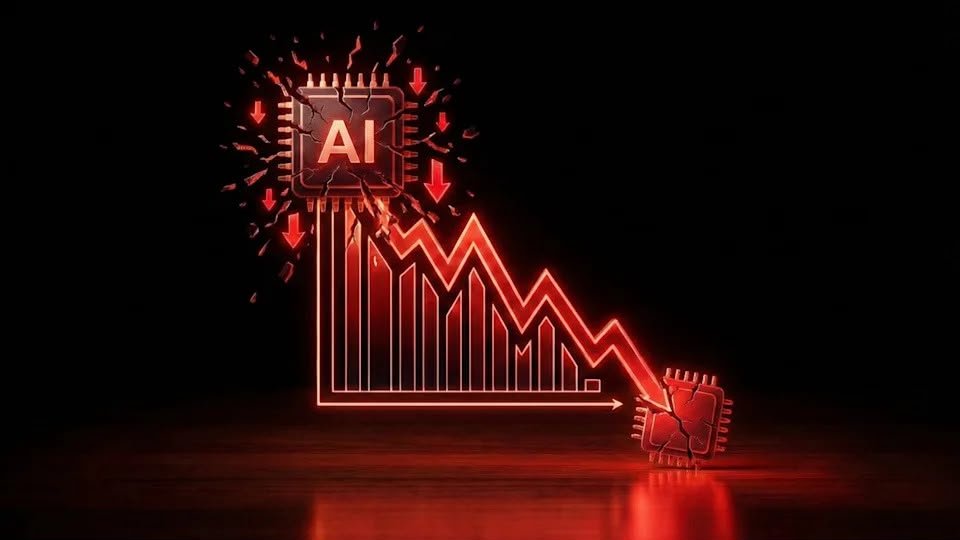
AI data centre stocks have come under pressure, while renewable energy shares have attracted renewed buying interest.
According to Reuters, investors are reassessing the future of AI regulation, data centre expansion and clean energy policy following the election results.
This has created a potential sector rotation that investors should understand.
The biggest question is no longer simply whether artificial intelligence will transform the economy.
It is whether the political and regulatory environment could change which companies benefit most from the AI boom.
The November 2026 US midterm elections produced a significant shift in political power.
Democrats won control of both chambers of Congress, creating a divided government for the remainder of President Trump’s term.
The result gives Democrats greater power to influence legislation, conduct congressional investigations and challenge parts of the administration’s policy agenda.
According to Associated Press reporting, economic concerns, inflation, the cost of living and dissatisfaction with the administration’s policies played important roles in the election outcome.
The US Congress influences several policies that affect financial markets:
A change in political control does not immediately change existing laws.
However, it can alter expectations about future legislation, regulatory scrutiny and government priorities.
Markets often respond to those expectations before policies are formally implemented.
Also Read – Corporate Actions in the Stock Market: Why Every Investor Must Track Company Announcements
The AI investment boom has been one of the biggest drivers of stock market performance in recent years.
Companies have committed enormous amounts of money to data centres, computing infrastructure, advanced chips and AI-related services.
But the sector is now facing a new political and regulatory question.
Democratic lawmakers have increasingly raised concerns about the consequences of rapid AI development.
Their priorities include:
Investors are now assessing whether greater regulatory scrutiny could affect the speed, cost or profitability of AI infrastructure projects.
However, increased regulation does not automatically mean AI development will stop.
The broader technology industry may continue to grow, even if certain companies face higher compliance costs.
Data centres require enormous amounts of electricity, land, cooling infrastructure and investment.
In several US states, their expansion has become a political issue because local communities are concerned about electricity demand, water consumption and infrastructure costs.
The election results could strengthen the voices of law makers seeking more oversight.
This creates uncertainty for companies that depend on rapid data centre expansion.
The AI investment story has attracted significant capital.
But investors are increasingly asking whether companies can justify their valuations through actual revenue and profits.
If regulatory uncertainty increases while capital expenditure remains high, some investors may become more cautious about expensive AI infrastructure businesses.
This combination of political uncertainty and valuation concerns can contribute to short-term volatility.
Renewable energy companies are attracting attention for a different reason.
A Democratic-controlled Congress could potentially support stronger renewable energy policies, greater clean energy investment and renewed discussions around incentives for low-carbon technologies.
The election results have therefore encouraged investors to reassess the prospects of selected clean energy companies.
Reuters reported that clean energy shares rallied while some AI-linked data centre stocks declined following the election.
Democratic lawmakers have historically supported a range of policies aimed at expanding renewable energy, reducing emissions and encouraging clean energy investment.
Investors are now examining whether the political shift could create a more favourable environment for certain renewable energy businesses.
The AI boom is not necessarily bad news for renewable energy.
Data centres need enormous amounts of electricity, and energy demand is expected to remain a major issue as digital infrastructure expands.
This creates opportunities for companies involved in:
The interesting development is that AI infrastructure and renewable energy may increasingly become connected investment themes.
Energy security has become an important concern for governments and businesses.
Renewable energy can help diversify electricity supply, reduce dependence on certain fuel sources and support long-term energy planning.
However, renewable energy projects also face financing costs, grid constraints, permitting delays and equipment challenges.
Investors should evaluate individual companies rather than assuming every clean energy stock will benefit equally.
CoreWeave has become one of the most closely watched companies in the AI infrastructure industry.
Its business focuses on providing cloud infrastructure and computing capacity designed for demanding AI workloads.
The company operates in a sector that has benefited from strong demand for advanced computing.
However, the election results have created a new set of questions for investors.
Regulatory uncertainty: Greater oversight of AI infrastructure could influence industry operating conditions.
Capital expenditure: Data centre expansion requires substantial investment.
Financing costs: Debt and financing requirements can become more important when interest rates remain elevated.
Customer concentration: Investors should examine the dependence on major customers and the sustainability of long-term contracts.
Competition: Large technology companies and other infrastructure providers continue to compete for AI workloads.
CoreWeave’s future performance will depend on demand, execution, financing, customer relationships and its ability to convert infrastructure investments into sustainable cash flow.
The stock’s market reaction should not be treated as proof that the company’s long-term business model is either broken or guaranteed to succeed.
The election-driven market rotation has brought clean energy back into focus.
However, investors should distinguish between a short-term political catalyst and a long-term business opportunity.
NextEra Energy is a major US energy company with substantial renewable energy operations.
Its business combines regulated utilities with renewable energy development.
Investors may examine its exposure to electricity demand growth, renewable energy investment, project financing and regulatory conditions.
The key risks include interest rates, capital expenditure requirements, project execution and changes in energy policy.
First Solar is a US-based solar technology and manufacturing company.
It operates in the solar industry, which may attract attention if investors anticipate renewed support for domestic clean energy manufacturing.
Important factors to research include manufacturing capacity, customer contracts, production costs, competition and policy incentives.
Solar manufacturing is a competitive business, and political support alone does not guarantee strong financial performance.
Brookfield Renewable operates a diversified portfolio of renewable power assets.
Its business includes renewable energy infrastructure and long-term power generation.
Investors may examine contracted cash flows, asset quality, financing costs, debt levels and the company’s ability to fund future development.
Renewable infrastructure can offer long-term opportunities, but its performance is also sensitive to interest rates and capital requirements.
These companies are examples for research, not recommendations to buy. Their inclusion does not imply that they will benefit directly or immediately from the election results.
The election reaction may be part of a broader market trend.
Investors are increasingly reassessing how political changes, interest rates, capital expenditure and corporate valuations could influence different industries.
Sector rotation occurs when investors shift capital from one industry or group of stocks towards another.
This can happen because of:
The current discussion is particularly interesting because the shift involves two major investment themes: artificial intelligence and renewable energy.
The market may be reassessing how these themes interact rather than simply abandoning one in favour of the other.
The US market influences global investor sentiment.
Developments in AI regulation, energy policy and capital allocation can affect international technology companies, renewable energy businesses and investment funds.
For UK investors, the US election also creates an opportunity to examine domestic companies benefiting from the growth of AI infrastructure.
One particularly interesting example is Drax Group.
While US investors are reassessing AI infrastructure, a major development has emerged in the UK.
On November 3, 2026, Drax Group announced a strategic partnership with Brookfield and Radiant to develop AI data centre capacity at Drax Power Station in North Yorkshire.
According to Drax’s official announcement, the total potential investment could exceed £20 billion, including semiconductor chips, with approximately £2.5 billion potentially supporting the first phase.
The project aims to combine existing energy infrastructure with the growing demand for AI computing capacity.
Drax’s power station estate offers access to substantial grid infrastructure and dispatchable generation capacity.
This could make the location attractive for large-scale data centre development.
According to the company announcement:
However, the project remains subject to planning permissions, regulatory and network approvals, commercial agreements and final investment decisions.
The partnership connects several major investment themes.
First, AI infrastructure requires reliable electricity.
Second, data centres need locations with suitable power access and supporting infrastructure.
Third, energy companies with established sites may explore opportunities to monetise infrastructure beyond traditional power generation.
But investors must also consider execution risks, funding requirements, regulatory approvals, project timelines and the potential financial impact on Drax’s existing business.
The £20 billion figure represents potential investment in the overall development, not guaranteed revenue or profit for Drax shareholders.
Markets may react strongly to election results and anticipated policies.
But actual legislation can take time, and political compromises may change the final outcome.
Investors should avoid making long-term investment decisions based entirely on initial market reactions.
Renewable energy businesses often require substantial capital.
Higher borrowing costs can affect project economics, while regulatory changes may influence incentives and profitability.
A favourable political environment cannot eliminate operational and financial risks.
A fall in certain AI stocks does not necessarily mean demand for AI computing is declining.
Businesses, governments and consumers may continue adopting AI technologies.
The investment opportunity may shift towards companies with stronger balance sheets, more sustainable financing and better cash flow visibility.
Rather than reacting to every headline, investors should monitor a few important developments.
| Market indicator | Why it matters |
| AI regulation proposals | Could affect technology infrastructure and operating costs |
| Data centre investment | Shows whether AI infrastructure expansion continues |
| Renewable energy policy | Influences incentives and project economics |
| US Treasury yields | Affects financing costs and stock valuations |
| Corporate earnings | Helps assess whether growth is translating into profits |
| UK Bank of England decision | Influences UK borrowing costs and investment sentiment |
| Drax project approvals | Determines whether the announced partnership progresses |
The November 2026 US midterm elections have created a new investment conversation.
AI data centre stocks are facing questions about regulation, capital expenditure and valuations.
Renewable energy shares are attracting attention because investors are reassessing the future of clean energy policy and electricity demand.
Meanwhile, the UK is presenting its own AI infrastructure opportunity through the Drax, Brookfield and Radiant partnership.
But investors should remember that market rotation is not a guaranteed trend.
Political developments can change. Regulatory proposals may not become law. Stock prices can move ahead of fundamentals, and companies can face unexpected challenges.
The smarter approach is to examine the underlying business.
A political headline may create a market opportunity, but sustainable earnings and sound financial fundamentals determine long-term investment value.
Disclaimer: This article is for educational purposes only and is not financial advice or a recommendation to buy or sell any security. Stock market investments involve risks, including loss of capital. Please conduct independent research or consult a qualified financial adviser before investing.
Investors are reassessing the possibility of greater AI regulation and congressional oversight following the Democratic victories. However, stock price movements also depend on valuations, earnings expectations and broader market conditions.
Investors are anticipating potential changes in US clean energy policy and renewed attention to renewable energy investment following the election results. The rally reflects expectations, not guaranteed future policy outcomes.
CoreWeave is an AI cloud infrastructure provider that supplies computing resources for AI workloads. Investors are monitoring its capital expenditure, financing, customer concentration and exposure to potential regulatory changes.
Drax announced a strategic partnership with Brookfield and Radiant to develop AI data centre capacity at Drax Power Station in North Yorkshire. The potential total investment could exceed £20 billion, subject to approvals and project development.
Investors may study companies such as NextEra Energy, First Solar and Brookfield Renewable. However, company fundamentals, valuation, financing costs and risks should be examined independently.
Sector rotation is the movement of investor capital between industries based on changes in economic conditions, policy expectations, valuations and earnings prospects.
Not necessarily. Investors should avoid making decisions solely based on political headlines or short-term price movements. Portfolio allocation should reflect investment goals, risk tolerance, valuation and business fundamentals.