
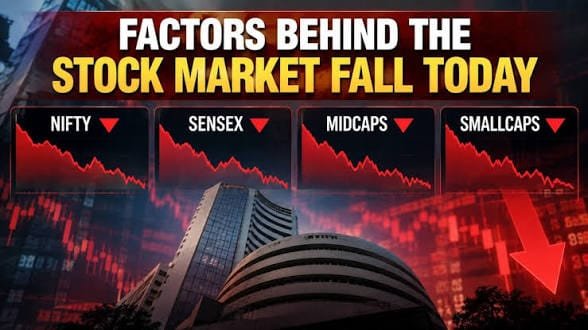
 11
Sensex today: The Indian stock market doesn’t move only because investors suddenly become optimistic.
Sometimes, the real story is hidden in three numbers.
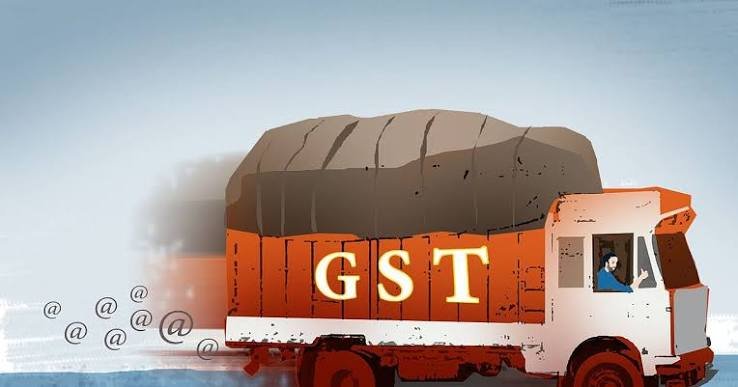
₹2.31 lakh crore.
The October GST collection figure.
A number that tells us something important about India’s economic activity, consumer demand and business transactions.
But GST collections are only one part of the bigger picture.
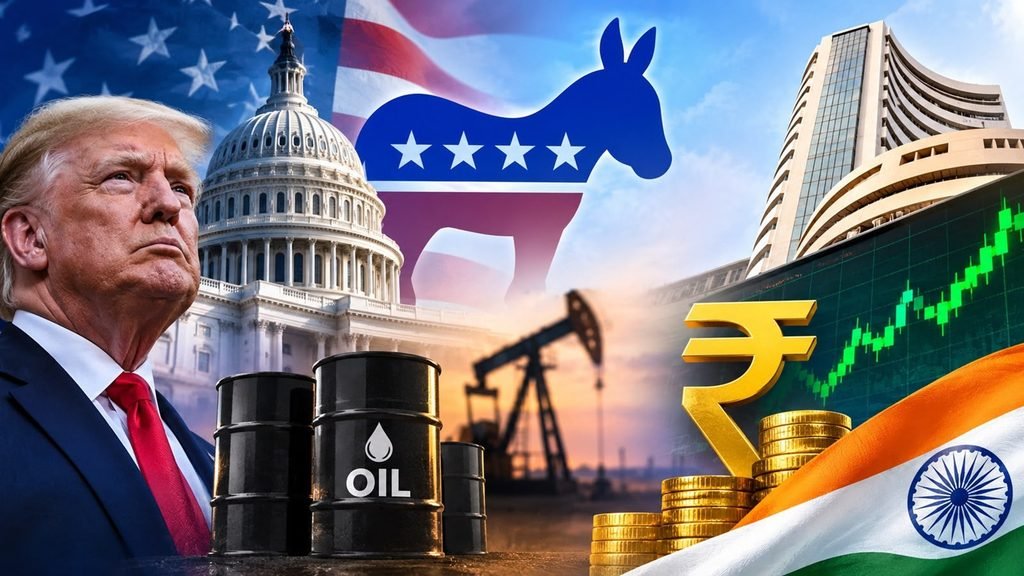
Crude oil prices, foreign investor flows and corporate earnings can all influence how investors approach the Indian stock market.
So, before celebrating a market rally or panicking about a correction, let’s understand what is actually happening.
India recorded gross GST collections of approximately ₹2.31 lakh crore in October 2026, representing a 22.9% year-on-year increase.
It was the second-highest monthly GST collection on record.
Now, why does this matter to stock market investors?
GST collections reflect economic transactions across multiple sectors.
When businesses sell more goods and services, tax collections can increase.
Higher collections may indicate stronger economic activity, although the figures can also be influenced by compliance improvements, tax adjustments, inflation and the timing of transactions.
The October number is particularly interesting because it came during the festive season.
Consumer spending on automobiles, electronics, clothing, travel and other products often increases during this period.
For investors, strong GST collections can provide encouraging evidence that demand across the economy remains active.
But one month of strong collections does not guarantee that consumption will remain equally strong in the coming months.
Also Read – Reliance Q2 FY27 Results: ₹3.62 Lakh Crore Revenue and ₹29,550 Crore Profit. But What Is the Real Story?
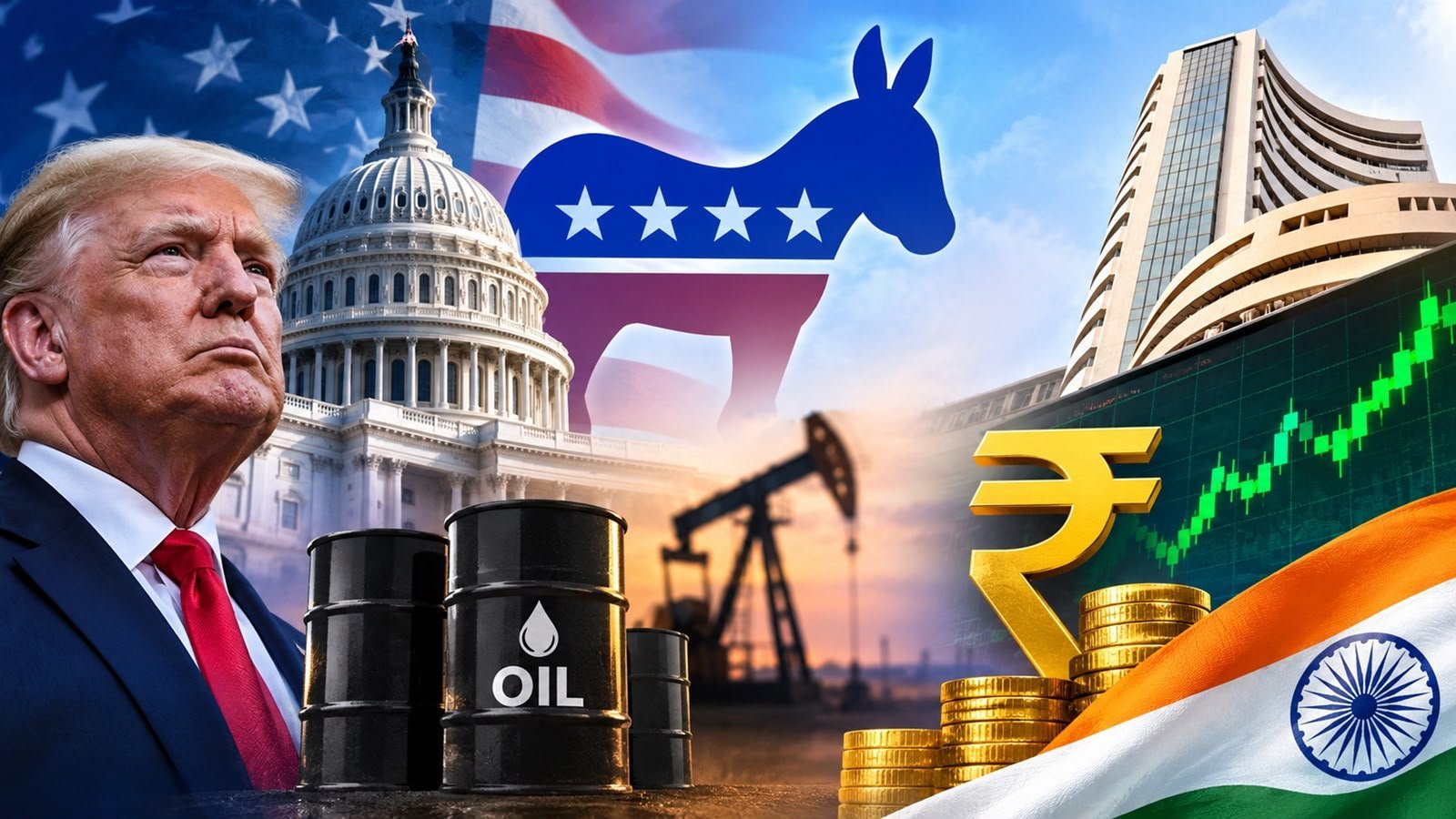
India imports a substantial portion of its crude oil requirements.
That makes global oil prices an important economic variable.
When crude prices rise sharply, India can face several challenges:
When crude prices decline, some of these pressures may ease.
Oil marketing companies, aviation businesses, paints, chemicals and several other sectors can potentially benefit, depending on their cost structures and pricing policies.
However, investors should not assume that lower crude prices automatically benefit every company.
The actual impact depends on inventory costs, hedging, government policies and how quickly companies pass on the benefits.
Foreign Portfolio Investors, commonly known as FPIs, can significantly influence Indian equity market movements.
During periods of global uncertainty, foreign investors may reduce exposure to emerging markets.
This can create selling pressure even when domestic economic indicators remain relatively strong.
However, the opposite can also happen.
When global risk appetite improves, foreign investors may return to Indian equities.
The important thing is to understand that FPI flows are influenced by several factors:
Domestic investors can provide support during periods of foreign selling, but that support should not be assumed to continue indefinitely.
This is where retail investors often make mistakes.
The Sensex rises 800 points.
Social media becomes optimistic.
Everyone starts discussing the next target for Nifty.
But the broader market may still be experiencing weakness.
Some sectors may be rallying while others continue to decline.
That is why investors should examine market breadth, sectoral performance and earnings rather than focusing exclusively on the index.
A rising index does not mean every stock has become a good investment.
My view is simple.
Do not make investment decisions based on one day’s market movement.
If you are investing for the long term, focus on business fundamentals, valuation and your financial goals.
If you are investing through SIPs, a market rally should not automatically change your investment strategy.
If you are trading, remember that volatility can create opportunities as well as sudden losses.
And if you are holding small-cap stocks, pay particular attention to liquidity and valuation risk.
India’s ₹2.31 lakh crore GST collection is encouraging evidence of economic activity.
Falling crude oil prices, if sustained, could also provide macroeconomic relief.
But the stock market is influenced by much more than these two factors.
Corporate earnings, global liquidity, foreign investor flows and valuations will continue to determine how the market performs.
The real question is not whether Sensex rises today.
It is whether the underlying economy and corporate earnings can support sustainable growth over the next several quarters.
Because a healthy market is built on more than optimism.
It is built on earnings, cash flows and economic strength.

One thought on “Sensex Today: ₹2.31 Lakh Crore GST Collections, Falling Crude and 3 Factors Driving Market Sentiment”