 11
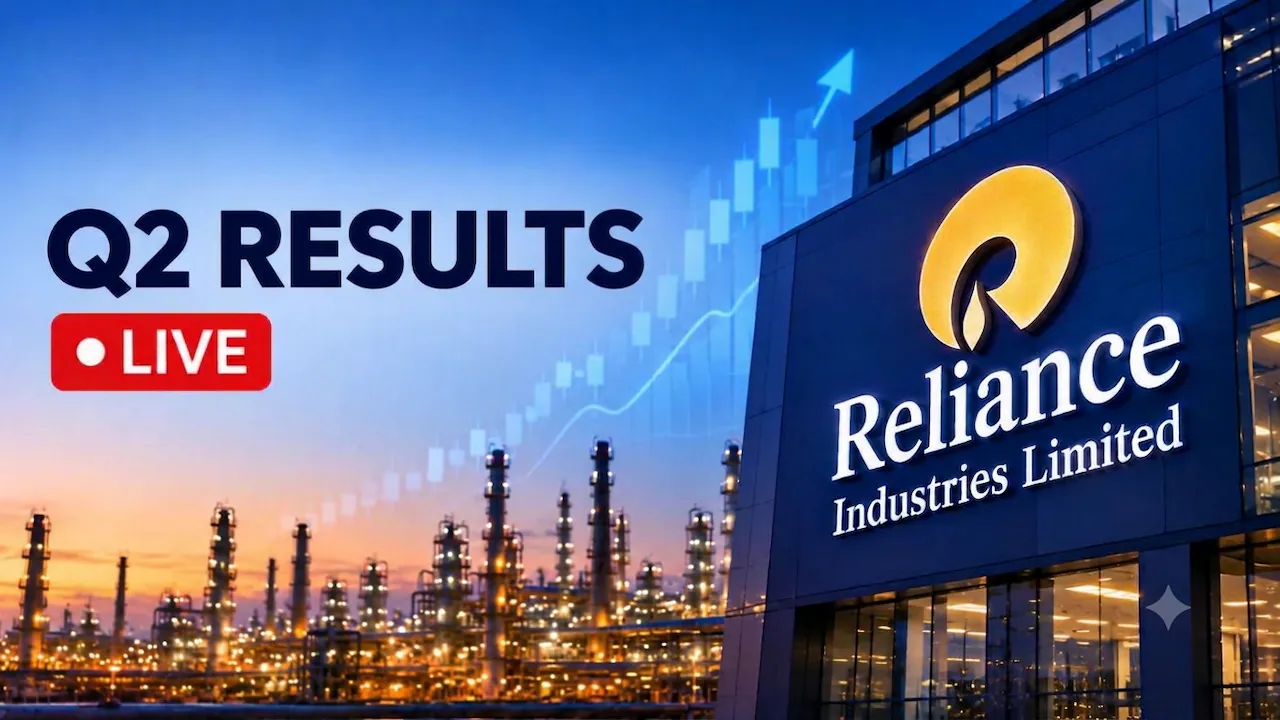
Reliance Q2 results FY27:
₹3,62,268 crore in revenue.
₹62,409 crore in EBITDA.
₹29,550 crore in quarterly profit.
And no, these are not full-year numbers.
These are Reliance Industries’ results for just three months.
On October 30, 2026, Reliance Industries announced its second-quarter results for FY27, delivering its highest-ever quarterly revenue and profit. Revenue increased 27.8% year-on-year, EBITDA rose 23.9%, and profit after tax jumped 33.8%.
But honestly, the most interesting part of this result is not just the money.
It is how Reliance is building multiple businesses that can support and strengthen one another.
Let’s break it down.
First, understand three important financial terms.
Revenue: The total money a company generates from selling its products and services.
EBITDA: A measure of operating profitability before interest, taxes, depreciation and amortisation. It helps investors understand how the underlying businesses are performing.
Net profit: The amount remaining after expenses, interest and taxes, along with relevant accounting adjustments.
Reliance reported:
| Financial metric | Q2 FY27 | Year-on-year growth |
| Gross revenue | ₹3,62,268 crore | 27.8% |
| EBITDA | ₹62,409 crore | 23.9% |
| Net profit | ₹29,550 crore | 33.8% |
Now, here’s something worth noticing.
Revenue grew 27.8%, but net profit grew even faster at 33.8%.
That means the company delivered stronger bottom-line growth than its topline growth.
However, investors should not look at one quarter in isolation. The sustainability of this performance depends on future earnings, cash flows, capital expenditure and the performance of individual business segments.
Let’s talk about Jio.
Reliance’s digital services business has reached a massive scale, with approximately 542.4 million subscribers.
Think about that number.
More than 54 crore people are connected to Jio’s ecosystem.
But the bigger opportunity is not simply selling mobile data.
Jio is expanding across multiple categories:
Jio’s digital services EBITDA reached ₹22,223 crore, growing 17.7% year-on-year.
The strategy is straightforward.
First, acquire and retain customers through connectivity.
Then, offer more services to those customers over time.
That creates opportunities to increase revenue per customer without depending exclusively on acquiring new subscribers.
The real value of Jio could lie in how much more it can sell to its existing customer base.
Also Read – Binance $6.3 Billion Crypto Hack: A Wake-Up Call for the Entire Cryptocurrency Industry
O2C stands for Oil-to-Chemicals.
This business takes crude oil and other raw materials and converts them into useful products such as fuels, petrochemicals and industrial materials.
And despite uncertainty in global energy markets, Reliance delivered an exceptional quarter.
O2C EBITDA increased 67.9% year-on-year to ₹25,203 crore.
This is a significant contribution to Reliance’s overall operating profitability.
Why?
Because Reliance operates a large, integrated refining and petrochemicals ecosystem.
Its ability to source raw materials, optimise operations and respond to changing global market conditions can influence profitability.
But remember, energy markets are cyclical.
A strong quarter does not guarantee the same level of earnings in every future quarter. Crude prices, refining margins, transportation costs and geopolitical developments can all change the picture.
Investors need to understand both the opportunity and the risk.
Reliance Retail operates across groceries, electronics, fashion, lifestyle and several other consumer categories.
Its strategy is not limited to opening more physical stores.
It is also building digital commerce capabilities and strengthening its consumer-facing ecosystem.
Here’s where things get interesting.
Imagine a customer who uses Jio for internet connectivity.
That customer might also purchase groceries through Reliance Retail, buy electronics through Reliance Digital and consume entertainment through Jio’s digital platforms.
This creates multiple touchpoints with the same customer.
In business terms, it creates opportunities for cross-selling, customer retention and greater lifetime value.
However, scale alone does not guarantee profitability.
Investors should also examine retail margins, inventory management, store productivity and the cost of expanding digital commerce.
Entertainment is another important piece of the puzzle.
With JioStar, Reliance has a significant presence across digital streaming, television broadcasting, sports and entertainment content.
The opportunity is enormous because entertainment can create recurring engagement.
A telecom customer might use mobile data for work.
But that same customer could spend hours watching entertainment, streaming sports or consuming digital content.
This can strengthen the overall customer ecosystem.
The challenge, however, is that content is expensive.
Sports rights, production costs, competition and advertising cycles can affect profitability.
So the important question is not simply how many people watch.
It is how effectively the business converts audience reach into sustainable revenue.
This is where Reliance’s strategy becomes particularly interesting.
It is not relying on one business to drive the entire company.
Instead, it is building an ecosystem where different businesses can create opportunities for one another.
| Business | Strategic role |
| Jio | Customer connectivity and digital infrastructure |
| Retail | Consumer products and distribution |
| JioStar | Entertainment and customer engagement |
| O2C | Industrial scale and operating cash generation |
| New Energy | Potential long-term energy transition opportunity |
| AI investments | Future technology and productivity opportunities |
The strategy is ambitious.
But investors should remember that diversification does not automatically eliminate risk.
Each business has its own competitive pressures, capital requirements and execution challenges.
The real test is whether these businesses collectively generate sustainable returns on capital.
Reliance reported net debt of approximately ₹1,17,140 crore at the end of the quarter.
That is lower than the previous quarter’s ₹1,22,914 crore.
However, the number in your original script needs correction: Reliance’s net debt did not fall to ₹7,740 crore.
Net debt remains above ₹1 lakh crore.
Investors should examine net debt alongside EBITDA, capital expenditure and cash flow rather than treating a single number as proof that the company has become debt-free.
The company’s capital-intensive investments also mean that future cash generation remains important.
Here is my perspective.
Reliance’s greatest opportunity may not be Jio alone.
It may not be retail alone.
It may not even be its energy business.
It could be the ability to connect all these businesses into one integrated commercial ecosystem.
But there is an equally important question.
Can Reliance convert this enormous scale into consistently improving shareholder returns?
That is what investors should monitor over the next several quarters.
Reliance Industries has delivered an exceptional Q2 FY27 performance.
The results demonstrate strong revenue growth, record quarterly profitability and significant contributions from its digital and O2C businesses.
But smart investors should look beyond the headline numbers.
They should evaluate earnings quality, cash flow, debt, capital expenditure and the performance of each business segment.
Because ultimately, the best investment story is not simply a company that makes a lot of money today.
It is a company that can continue creating value tomorrow.
What do you think is Reliance’s biggest long-term opportunity: Jio, Retail, O2C, New Energy or the power of combining all its businesses?
Follow Abhishek Kar for more practical business and market insights.




One thought on “Reliance Q2 FY27 Results: ₹3.62 Lakh Crore Revenue and ₹29,550 Crore Profit. But What Is the Real Story?”