
 11
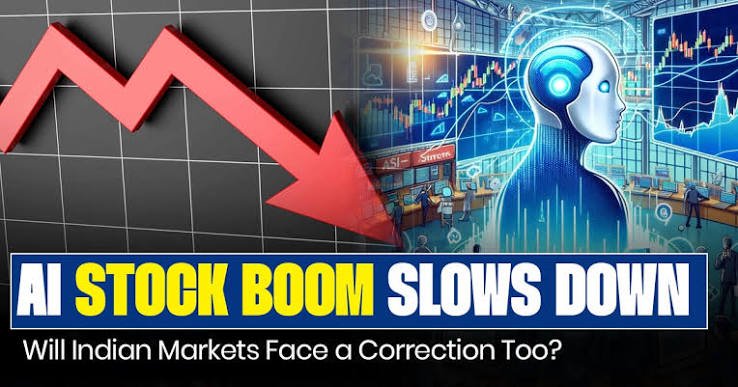
Indian IT stocks 2026: The global technology trade is facing a difficult question.
Companies have invested billions of dollars in artificial intelligence.
Data centres are expanding.
Chip demand has exploded.
AI infrastructure spending continues to dominate corporate earnings discussions.
But investors are beginning to ask something uncomfortable.
When will these investments generate enough profit to justify their enormous cost?
This uncertainty has triggered volatility in global technology stocks.
For Indian investors, the question is particularly important.
Are Indian IT stocks becoming a defensive investment during global technology corrections?
Or are they facing a deeper structural risk from artificial intelligence?
The answer is more complicated than either headline suggests.
The recent global AI sell-off has been driven by concerns about capital expenditure, earnings expectations and the sustainability of AI valuations.
Investors are increasingly demanding evidence that AI investments will generate meaningful returns.
This is a natural transition.
During the early stages of a technological revolution, investors often reward companies for investing aggressively.
As the industry matures, attention shifts towards profitability.
Companies must demonstrate that their investments can produce measurable revenue growth, cost savings and sustainable cash flows.
This shift can create volatility for businesses whose valuations depend heavily on future expectations.
Indian IT companies operate differently from many global technology giants.
Companies such as HCLTech, Persistent Systems, Infosys, TCS and Wipro provide technology services to enterprises across the world.
Their business models include:
As companies invest in artificial intelligence, they need assistance integrating these technologies into existing business operations.
This creates an opportunity for Indian IT services providers.
The companies that successfully help clients deploy AI at scale could potentially benefit from new demand.
Let’s not ignore the other side.
Artificial intelligence can automate tasks that previously required large teams of software engineers.
Code generation, testing, documentation, customer support and routine maintenance are all being affected.
This creates a challenge for the traditional IT outsourcing model.
If clients can complete certain tasks with fewer employees, they may reduce the amount of work outsourced to technology services companies.
That could put pressure on revenue growth and pricing.
Indian IT companies must therefore evolve.
They need to move from selling hours and manpower towards delivering business outcomes, specialised expertise and technology-led productivity.
The transition will not be equally successful for every company.
Also Read – Jio Platforms Lists at ₹1,358: A 21% Premium. Should Investors Hold, Buy or Sell?
Different Indian IT companies have different business models.
HCLTech has exposure to engineering services, infrastructure services and enterprise technology.
Persistent Systems has a strong focus on software product engineering and digital transformation.
These capabilities may create opportunities as enterprises invest in AI integration and modernisation.
However, investors should not assume that a particular company is protected from AI disruption.
The actual opportunity depends on its client relationships, service mix, pricing power, execution and ability to deliver measurable productivity improvements.
Historically, IT services companies have sometimes been viewed as defensive because of their recurring client relationships, global diversification and relatively asset-light business models.
But the word “defensive” needs to be used carefully.
Indian IT companies remain exposed to global economic conditions.
If US and European businesses reduce technology spending, Indian IT revenues can come under pressure.
Currency movements, wage costs and competition also influence profitability.
AI adds another layer of uncertainty.
Therefore, Indian IT stocks may offer diversification benefits in some market conditions, but they are not automatically safe investments during a technology sell-off.
Some market participants are observing bullish candlestick formations on Nifty IT charts.
A bullish engulfing pattern, for example, can indicate that buying pressure has strengthened after a period of selling.
But technical patterns are not guarantees.
They should be evaluated alongside trading volumes, broader market trends and price levels.
More importantly, technical strength cannot replace fundamental analysis.
A stock can show a bullish chart while still facing deteriorating earnings expectations.
If you are evaluating Indian IT stocks, focus on these indicators.
Large deal announcements are useful, but investors should also understand the timing of revenue conversion.
Are global clients increasing technology budgets or delaying projects?
Can the company demonstrate that AI services are generating meaningful business?
Are productivity improvements translating into higher profitability?
AI adoption may allow companies to deliver more work with fewer resources.
Are investors paying a reasonable price for future earnings growth?
These indicators will help distinguish companies adapting successfully from those facing greater disruption.
The AI revolution is creating both opportunities and risks for Indian IT companies.
The sector could benefit from AI implementation, cloud transformation and enterprise modernisation.
But it must also confront automation, pricing pressure and changing client expectations.
My view is that investors should avoid treating Indian IT as either an automatic safe haven or a sector destined to collapse.
The next phase will reward companies that adapt their business models, improve productivity and deliver measurable outcomes.
AI will not simply eliminate the technology services industry.
But it could fundamentally change which companies deserve the highest valuations.
And that is exactly what investors need to pay attention to.



One thought on “Indian IT Stocks and the AI De-Risking Wave: Are Technology Shares Becoming a Defensive Investment?”